Embroidered Patches vs Printed Patches Differences: Pros & Cons
You need custom patches, but should you go with embroidered or printed? It's one of the most common questions asked by buyers, and the answer isn't always obvious without understanding what each method delivers and where each falls short.
Custom embroidered patches and printed patches are fundamentally different in how they're made, how they look, and how they perform over time. This guide covers every key difference so you can choose the right option for your specific application, whether you're ordering for uniforms, fashion, branding, or merchandise.
How Each Type Is Made
Embroidered Patches
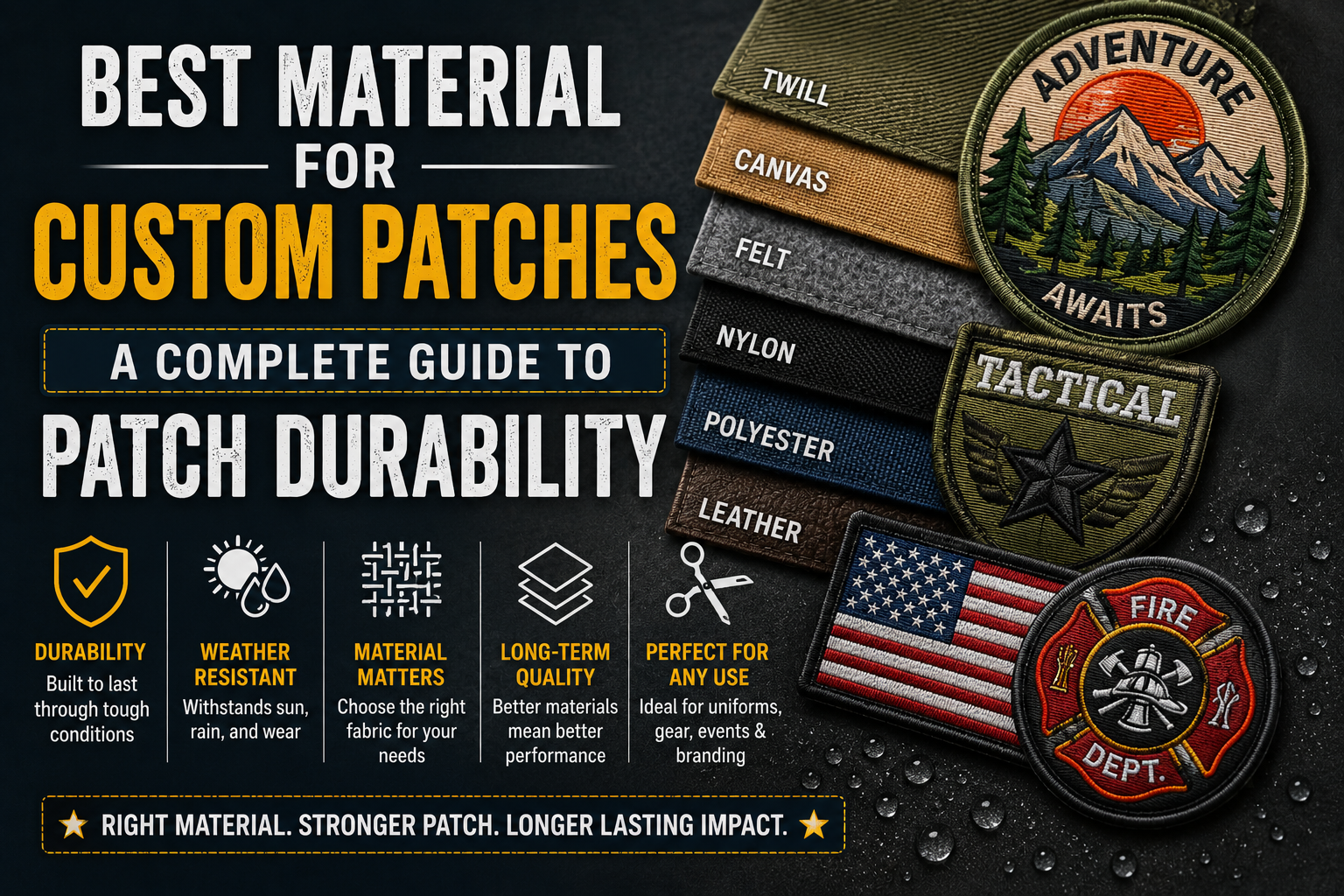
Embroidered patches are created by stitching polyester or rayon thread onto a woven twill backing using computerized embroidery machines. A digitized file tells the machine exactly where each stitch goes, layer by layer, building up the design in thread.
The result is a textured, three-dimensional piece with raised stitching and a distinctly handcrafted look. Thread coverage typically ranges from 50% to 100% of the patch surface. Designs with 75%+ coverage are considered high-quality and most visually impressive.
Variants include custom 3D embroidered patches, which add extra layers of foam padding beneath the stitching to create a boldly raised effect.
Printed Patches
Printed patches apply design to a fabric surface using various printing methods:
- Sublimation printing — Heat-transfers dye directly into polyester fabric for photographic-quality, full-color results
- Screen printing — Pushes ink through a mesh screen onto fabric; works well for bold, limited-color designs
- Direct-to-fabric (DTG) — Digitally prints ink onto fabric similarly to a paper inkjet printer
- Heat transfer — Applies a pre-printed design via heat press
The result is a flat, image-quality design with smooth color transitions and photographic clarity.
Visual Appearance: The Most Obvious Difference
Embroidered patches have:
- A raised, textured surface with visible thread
- A handcrafted, artisanal quality
- A premium, structured look
- Bold, saturated solid colors
- Defined edges and a sense of depth
Printed patches have:
- A flat, smooth surface
- Photo-realistic color capability (millions of colors, gradients, shadows)
- A more "graphic" or digital feel
- Precise color matching to brand assets
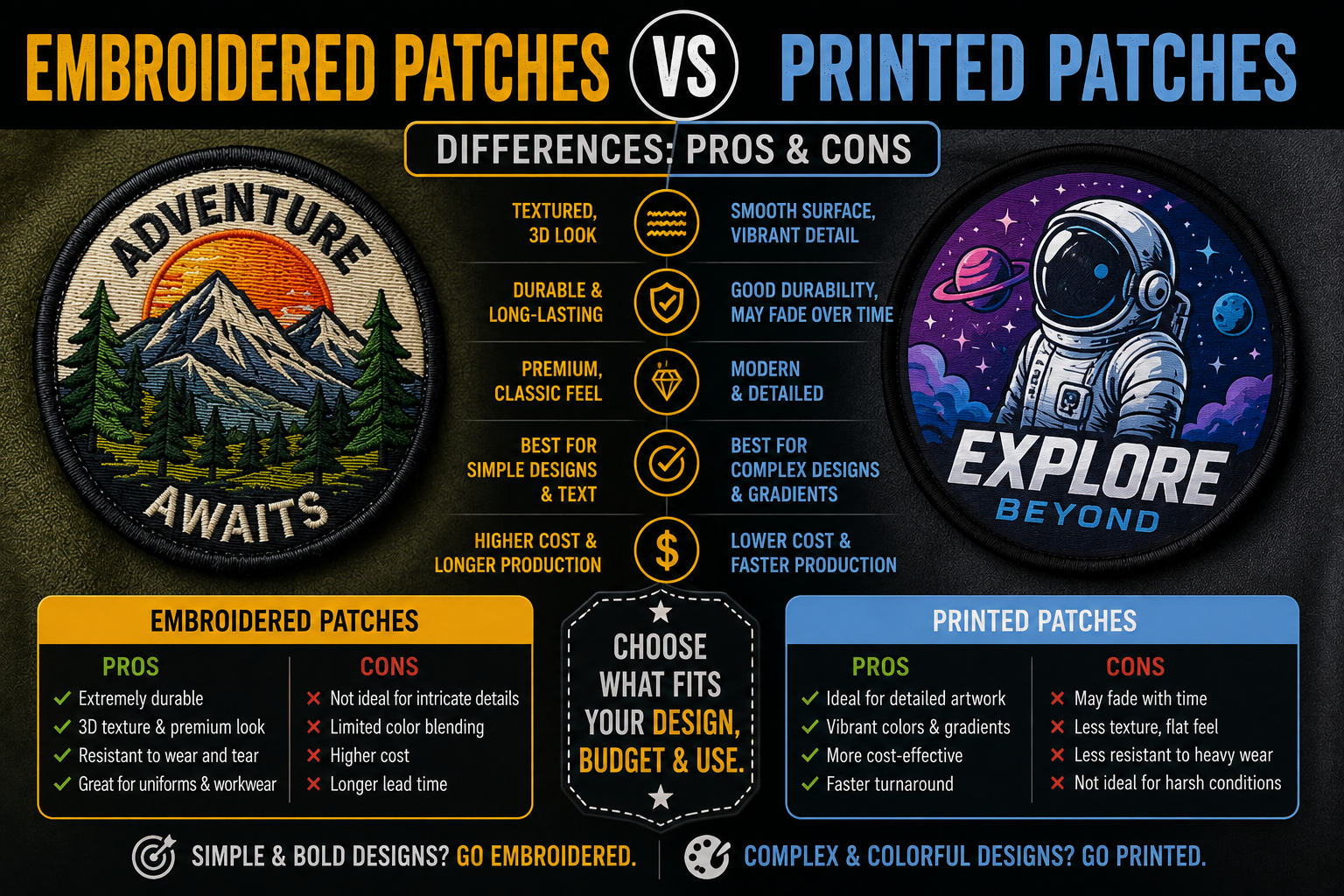
Bottom line on appearance: If you want a premium, tactile, prestigious look: embroidery wins. If you need photographic accuracy or complex gradients: printing is necessary.
Durability Comparison
Embroidered Patches
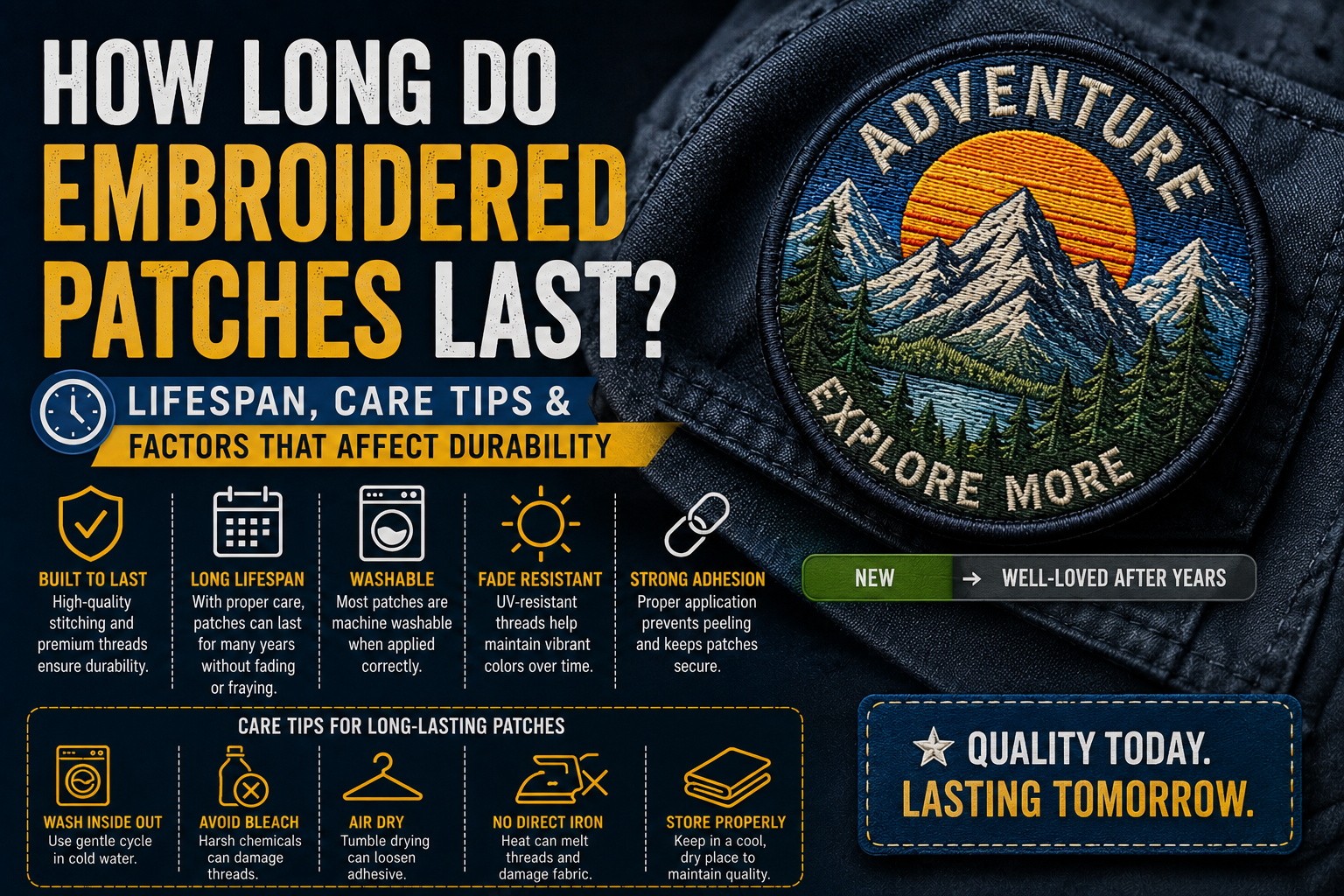
- Thread doesn't crack, peel, or flake
- Polyester thread is colorfast, resists fading through 200–500+ washes
- The construction is robust; even heavy daily use causes minimal degradation
- Can last 10–15+ years on regularly worn garments
Printed Patches
- Ink is applied to the fabric surface and can degrade over time
- Screen print and heat transfer patches can crack, peel, or fade after 50–100 washes
- Sublimation-printed patches are more durable, comparable to embroidery in fade resistance
- Generally not as robust under heavy outdoor or utility conditions
Winner: Embroidery for most utility and uniform applications. Sublimation-printed patches are a competitive option for decorative or merchandise applications.
Detail and Color Complexity
Where Printing Wins
Printed patches can reproduce photographic images, gradient color transitions, extremely fine lines, and designs with 10+ colors. This is why custom sublimation patches exist, they fill the gap where embroidery can't go.
Where Embroidery Wins
Embroidery handles bold logos, text, most brand marks and insignia, and designs with up to 8–10 solid colors. For a comparison of two embroidery-adjacent techniques, Embroidered vs Woven Patches shows that woven patches can achieve even finer text detail than standard embroidery.
Cost Comparison
For simple designs, embroidered patches are cost-competitive at volume… especially for orders of 50 or more pieces.
Custom embroidered patches wholesale or custom embroidered patches bulk order pricing makes embroidery highly cost-effective at scale. For small teams or individual orders, custom embroidered patches no minimum options make embroidery accessible without large volume commitments.
Application Versatility
Both types can be made with the same backing options (sew-on, iron-on, Velcro, adhesive). The considerations around backing for patches apply equally to both types, so always choose the right attachment method for your garment.
Custom embroidered patches for jackets and custom embroidered patches for hats have a long track record of excellent performance across both casual and professional applications.
Professional and Industry Standards
For formal, institutional, or authority-bearing applications, embroidered patches are the industry standard:
- Custom military patches are universally embroidered
- Custom police patches and law enforcement insignia are embroidered
- Custom uniform patches for corporate and security use are almost exclusively embroidered
- Custom biker patches follow a strong tradition of embroidery
When to Choose Embroidered Patches
Choose custom embroidered patches when you need:
- ✅ Maximum durability for daily-wear uniforms
- ✅ A premium, tactile, professional appearance
- ✅ Long-lasting colors through frequent washing
- ✅ Institutional or authority-bearing identity (military, police, corporate)
- ✅ Custom logo patches for business that look impressive up close and at distance
- ✅ Custom biker patches, club, or organization identity
- ✅ Custom embroidered patches for jackets or other high-profile items
When to Choose Printed Patches
Choose printed patches when you need:
- ✅ Photographic or complex gradient designs
- ✅ More than 10 colors in a complex illustration
- ✅ Extremely fine detail (faces, realistic imagery)
- ✅ A more graphic/digital design aesthetic
Side-by-Side Comparison
Feature Embroidered Patches Printed Patches Appearance Textured, 3D, premium Flat, photographic Durability Excellent (10+ years) Good–Very Good Color Range Up to 10–15 solid colors Unlimited Gradient Support Limited Excellent Wash Resistance Outstanding Moderate–Good Professional Look Premium, institutional Graphic, modern Cost at Volume Very competitive Competitive Weight Slightly heavier Lighter Industry Standard Uniforms, military, police Merchandise, fashion
Get Expert Guidance on Your Patch Order
Still not sure which type is right for you? The experts at Custom Embroidered Patches Hub can review your design and recommend the best patch type, material, and construction for your specific use case, whether it's a single patch or a custom embroidered patches wholesale run.
Need a patch design that fits your brand?
This is the end-of-article conversion section. Repeat the core value props and give one clear next step.
- Free design support
- Fast turnaround
- Made in USA quality
- No setup stress